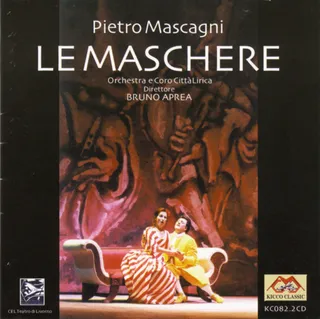
Le Maschere - CD Review
Yonel Buldrini reviews with enthusiasm the recent release of a 2-CD set of Le Maschere published on label Kicco, from a performance recorded live in Livorno in 2001.
37 original essays, CD reviews, literary texts, interviews, and historical press articles
Yonel Buldrini reviews with enthusiasm the recent release of a 2-CD set of Le Maschere published on label Kicco, from a performance recorded live in Livorno in 2001.
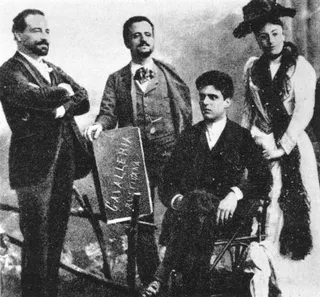
William Schoell offers in this article a survey of Mascagni's operatic output, from Cavalleria Rusticana to Nerone, highlighting Mascagni's taste for experimentation.
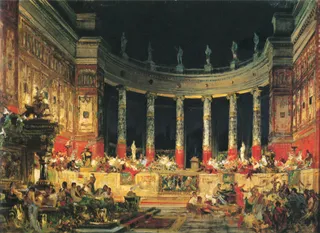
Roberto Bianchini's article discusses the relationship between Vistilia and Nerone, the two operas of Roman background on which Mascagni worked over decades. The former never saw the light of day (although the libretto was published in 1900), and the latter premiered in 1935.
Upon listening to Nerone and learning that Mascagni "reused" music written decades earlier, many have been wondering what music was actually reused and what music was composed specifically for Nerone. This article offers some good answers. The article is available in English translation as well as in original Italian.
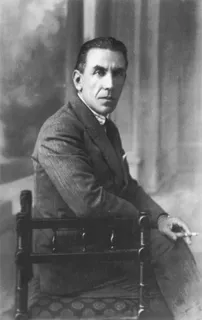
Konrad Dryden tackles the relationship between Mascagni and Riccardo Zandonai, the composer of the superb Francesca da Rimini.
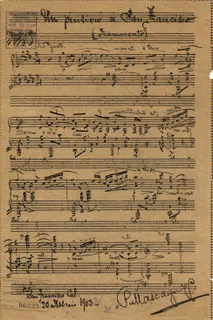
After introducing the difficult beginning of Mascagni's first and only North American tour in 1902-1903, Erik Bruchez retraces the successes that marked Mascagni's stay in San Francisco in early 1903.
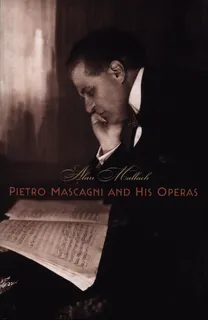
Roger Flury reviews Alan Mallach's new biography, Pietro Mascagni and His Operas.
The author begins with a review of the CD from the performance of Parisina that took place in Montpellier in July 1999. He follows with considerations about the opera, discussing in particular the criticisms that have historically been directed at the work. He concludes with comments about the unfortunate attitude some critics have today when writing about opera.
The article is available in English translation as well as in original Italian.
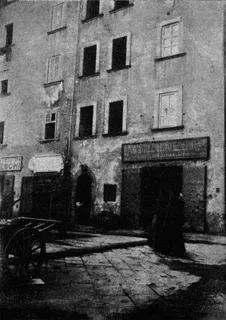
Maria Nockin recounts the major events of Mascagni's life up to the composition and premiere of Cavalleria Rusticana.
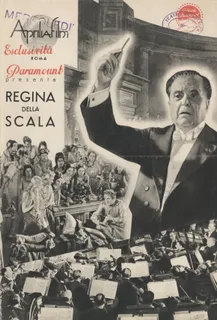
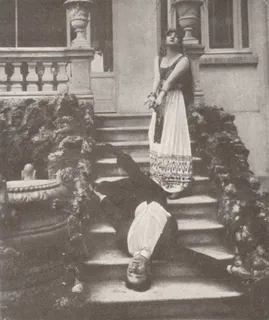
This poem was published in 1915, year of the premiere of the film Rapsodia Satanica for which Mascagni composed music.
There are clues that suggest that a page of text may be missing in the original booklet. On the other hand, a version of the poem republished in a later anthology does not contain additional text, but adds a colon where the page was suspected to be missing. A reference to a footnote marks the point where text may be missing.
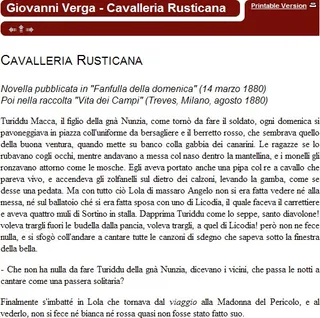
This short story by Giovanni Verga is the source for Mascagni's famous opera. It was first published in Fanfulla della domenica of March 14, 1880, and then in the collection Vita dei Campi in August 1880 (ed. Treves, Milan).
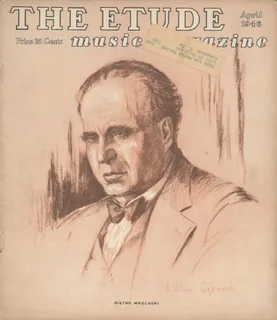
This obituary was published in August 1945, very shortly after Mascagni died. The article contains lots of errors and imprecisions and is presented here as a document. Do not rely too much on the information presented in this article.
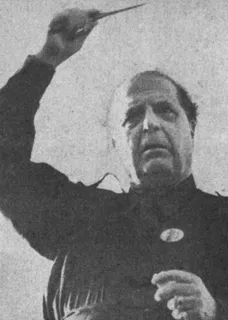
This obituary was published in Time Magazine a little over a week after Mascagni's passing. It is hard to imagine a more misinformed piece, which borders on hatred for the composer and his pre- and post-Cavalleria achievements.
The article was written at a difficult time, and the focus of the author on Fascism may be understandable, but it is extremely reductive. Mascagni's relationship with the Fascist regime is today better understood, thanks in particular to Alan Mallach's biography, which makes it clear that Mascagni was no Fascist activist, and that his support for the regime was mostly ornamental.
This article is published here to illustrate the extremes that Mascagni's critics have too often reached. The footnotes are Mascagni.org's.
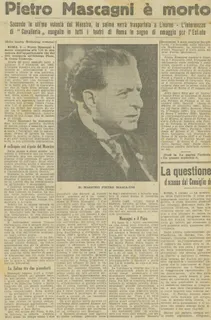
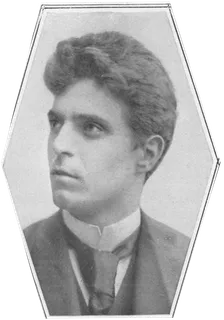
Published in La Lettura in March 1932 on the eve of the premiere of Pinotta, this memoir by Mascagni’s lifelong friend and librettist recalls the young composer’s schoolboy years in Livorno, his studies under Alfredo Soffredini, the 1881 triumph of In filanda, and how Mascagni reshaped the original ending of Cavalleria Rusticana.
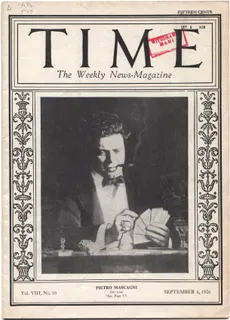
This article was published in the Time Magazine of September 6, 1926. The author is unknown. The article contains its share of typos and inexactitudes - don't rely on it for facts about how Mascagni got to write Cavalleria Rusticana!
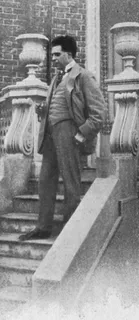
This article was written by Mascagni in late 1913 on the eve of the La Scala premiere and published in La Lettura in January 1914.
The article is available in English translation as well as in the original Italian.
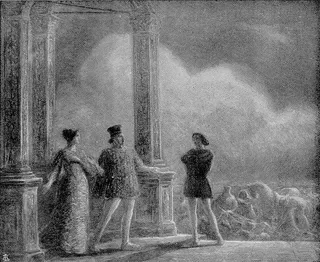
In this article from 1913, Emil Thieben describes the high anticipation generated in Italy by Mascagni's latest opera, Parisina. After a detailed synopsis of the plot, he gives his impression of the premiere of the opera, mainly from a musical standpoint.
The article is available in English translation as well as in original German.
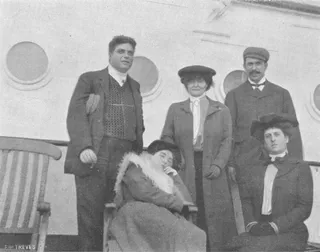
This article was published in L'Illustrazione Italiana of March 1, 1903. The author, Carlo Paladini, tells of how he met by chance at a Florence restaurant Mr. Joseph Smith, a manager involved with Mascagni's arrest during his US tour, and also manager of Eleonora Duse. Follows a fairly unstructured conversation where the author tries to obtain useful information from a fairly secretive and defensive Mr. Smith. The article features a photograph of Mascagni, his wife, and Mr. Smith aboard the Philadelphia on the way to the United States.
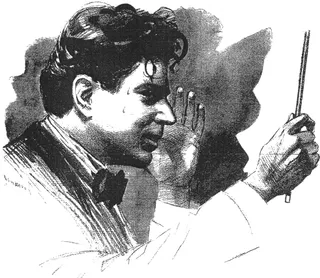
Review of Mascagni’s two concerts on Sunday, February 22, 1903: an afternoon performance of Rossini’s Stabat Mater, Chopin’s Marche Funèbre, and selections from Guglielmo Ratcliff at the Alhambra Theater, followed by a packed evening promenade concert at the Mechanics’ Pavilion concluding with Tchaikovsky’s 1812 Overture.
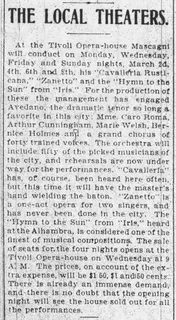
Announcement of Mascagni’s staged engagement at the Tivoli Opera-House beginning March 2, 1903, conducting Cavalleria Rusticana and the Hymn to the Sun from Iris with local soloists including Fernando Avedano and Caro Roma.
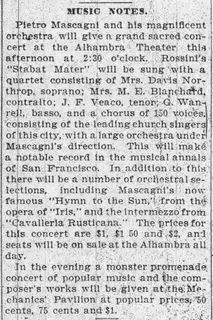
Notice for Mascagni’s Sunday double bill on February 22, 1903: the afternoon sacred concert featuring Rossini’s Stabat Mater at the Alhambra Theater and the evening popular promenade concert at the Mechanics’ Pavilion.
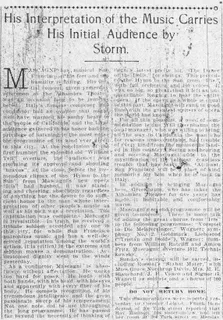
Enthusiastic review of Mascagni’s opening San Francisco concert at the Alhambra Theater on February 17, 1903, praising his conducting from memory in Rossini’s William Tell Overture, Tchaikovsky’s Pathétique Symphony, suites from The Eternal City, and the Hymn to the Sun from Iris.
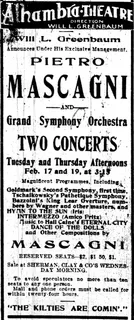
Preview notice detailing Manager Will Greenbaum’s orchestral and choral preparations, concertmaster Ferdinand Stark, repertoire, and anti-speculator ticket rules for Mascagni’s opening Alhambra Theater concerts.
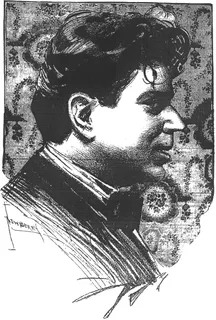
Arrival interview published the morning after Mascagni reached San Francisco on February 7, 1903, capturing his humor over absurd American vaudeville and band offers, his frustration at being known solely for the Cavalleria Intermezzo, and his observations on American musical audiences.
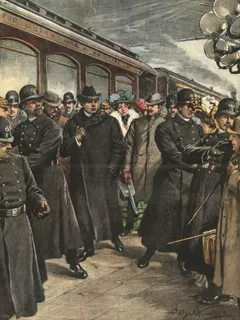
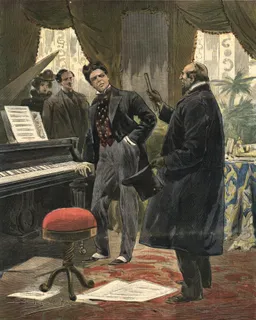
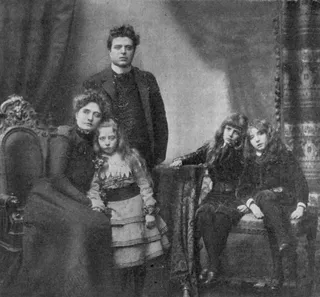
Henry T. Finck wrote this article at the beginning of Mascagni's 1902-1903 American tour. Most of his facts are correct, and his desire to see Guglielmo Ratcliff performed is quite justified. However his appreciation of Zanetto and Iris is misguided and typical of a misunderstanding of Mascagni's operatic output, which consists in expecting his other operas to sound like Cavalleria Rusticana. This attitude unfortunately persists today.
This article was originally published as Il testamento del secolo: Evoluzione della Musica., Cronaca Musicale, Milan, 15 March, 1900, as an address given at the Teatro Goldoni in Venice.
The English edition presented here was published in The Century Library of Music 16: 517-540. New York, 1901, and later in the International Library of Music for Home and Studio, vol. 2. New York: The University Society, 1925. Pages 441-463.
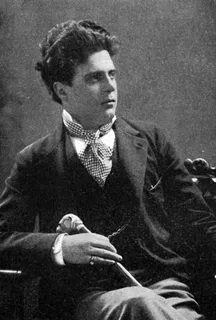
This article was published in 1897 and contains some imprecisions, in particular in the synopsis of "Iris". It is presented here as a document. Do not rely too much on the information presented in this article.
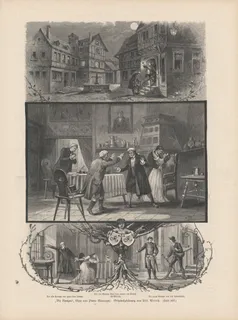
This article was published in an 1893 issue of the Deutsche Illustrierte Zeitung (German Illustrated Newspaper). The beginning of the article is missing, but probably amounts to a few paragraphs at most. The actual title of the article is unknown.
The author starts by explaining the reasons of the success of I Rantzau in Berlin, a success not simply explained by the musical quality of the work. He then talks about the speed at which Cavalleria spread through Europe, making Mascagni suddenly famous and rich. He mentions Mascagni's life before Cavalleria and the composition of the opera with the collaboration or his librettists. He moves on to I Rantzau. He mentions the origin of the libretto and summarizes the plot. Although according to him the musical treatment does not appear as fitting as in Cavalleria Rusticana, the opera does not lack memorable pieces. Finally, he praises the German premiere of I Rantzau that took place in Berlin on February 25, 1893.
The article is illustrated with a full-page (27.8 x 37.4 cm) engraving showing scenes from I Rantzau (see the original document). The engraving is entitled "Die Rantzau", Oper von Pietro Mascagni. Originalzeichnung von Alb. Wirth. ("The Rantzau", opera of Pietro Mascagni. Original drawing by Alb. Wirth.).
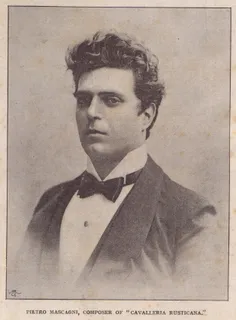
This article was probably published around the fall of 1892 after the Rome performances of I Rantzau. The author's name and exact date of publication are unknown.