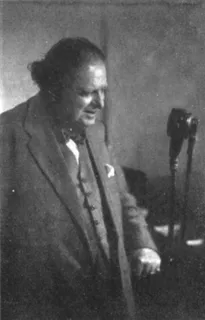
Biography of Pietro Mascagni
Life, Operas & Conducting Career (1863–1945)
Pietro Mascagni (December 7, 1863 – August 2, 1945) was an Italian composer and conductor whose 1890 one-act masterpiece Cavalleria rusticana caused one of the greatest sensations in opera history and launched the verismo movement on the lyric stage.
Far from being a “one-opera composer” (see Myths & Misconceptions), Mascagni composed fifteen operas and an operetta — spanning pastoral idyll (L’amico Fritz), Romantic tragedy (Guglielmo Ratcliff), Japanese symbolism (Iris), commedia dell’arte (Le maschere), D’Annunzian tragedy (Parisina), and revolutionary drama (Il piccolo Marat) — alongside sacred, symphonic, silent-film, vocal, and piano works, while enjoying decades of international acclaim on the podium.
- Born
- Dec 7, 1863 · Livorno
- Died
- Aug 2, 1945 · Rome
- Stage Works
- 15 Operas & 1 Operetta
- Recorded Voice
- 1940 Milan Speech
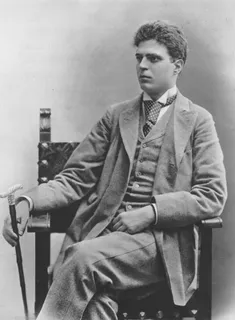
Early Life & Musical Education
1863–1885- 1863 Dec 7Born in Livorno (Pietro Antonio Stefano Mascagni), second son of baker Domenico Mascagni and Emilia Reboa. Giovanni Targioni-Tozzetti (“Nanni”), his lifelong friend and librettist, is born in Livorno the same year.
- 1873His mother Emilia dies of tuberculosis when Pietro is nine.
- 1876Against his father’s wish that he study law, begins musical studies under Alfredo Soffredini at the newly founded Istituto Musicale di Livorno (later Istituto Luigi Cherubini), sheltered and encouraged by his sympathetic uncle Stefano.
- 1879–1880Composes his earliest liturgical and instrumental works at the Institute, including a Sinfonia in do minore, Elegia, Kyrie, Gloria, Ave Maria, and Pater Noster.
- 1881 Feb 9Premiere in Livorno of his first cantata, In filanda, which wins first prize in a Milan musical competition; in Milan he meets Arrigo Boito and Amilcare Ponchielli. Following his uncle’s death, his father reconciles with his musical career.
- 1882Composes the Schiller cantata Alla gioia (premiered March 27 in Livorno), earning the financial patronage of Count Florestano de Larderel. Moves to Milan (May 6) and passes the entrance examination to the Milan Conservatory (Oct 12), studying under Amilcare Ponchielli, Michele Saladino, and Amintore Galli while sharing student lodgings with Giacomo Puccini.
- 1883Death of his sister Maria (Jan 9). Expands In filanda into the opera Pinotta — rejected from the Conservatory competition due to a late submission — and begins setting Heinrich Heine’s tragedy Guglielmo Ratcliff.
- 1885Conducts his romanza Il re a Napoli in Cremona (Mar 18). Chafing against academic discipline, leaves the Milan Conservatory without graduating and tours Italy as a conductor with travelling operetta companies (Forlì, Scognamiglio, Vassallo, and Luigi Maresca).
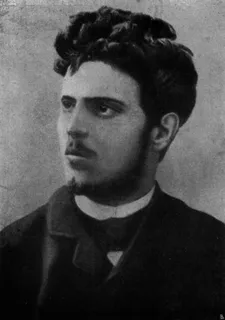
Cerignola & the Triumph of Cavalleria rusticana
1886–1890- 1886–1887Arrives in Cerignola (Apulia) with Maresca’s operetta troupe in December 1886 accompanied by his future wife, Argenide Marcellina Carbognani (“Lina”). Aided by Mayor Giuseppe Cannone, leaves the company in early 1887 to direct Cerignola’s new municipal Filarmonica and give piano lessons.
- 1888Composes and conducts his Messa di Gloria in Cerignola (April). In July, Milan publisher Edoardo Sonzogno announces his second competition for a one-act opera; setting aside the ambitious Guglielmo Ratcliff, Mascagni turns to Giovanni Verga’s Cavalleria rusticana on a libretto by Targioni-Tozzetti and Guido Menasci (dating the piano draft of the Intermezzo on October 26).
- 1889Marries Lina Carbognani (Feb 3); their first son, Domenico (“Mimì”), is born the next day (Feb 4; followed by son Dino in 1891 and daughter Emi in 1892). Completes Cavalleria rusticana and dispatches the manuscript to Milan on the closing deadline (May 27).
- 1890 May 17Summoned to Rome in February and wins first prize over 72 competing scores. Premiere of Cavalleria rusticana at the Teatro Costanzi in Rome: an extraordinary triumph that rapidly sweeps Italy (Florence, Turin, Bologna, Palermo, Milan, Genoa, Naples, Venice, Trieste) and international stages — conducted by Gustav Mahler in Budapest in December, followed by Munich, Hamburg, St. Petersburg, Dresden, Buenos Aires, and Vienna. At age 26, Mascagni becomes world-famous overnight.
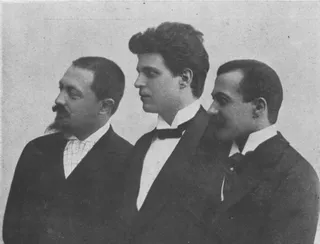
Consolidation, Pesaro & Turn-of-the-Century Tours
1891–1903- 1891 Oct 31Premiere at the Teatro Costanzi in Rome of L’amico Fritz, a gentle Alsatian idyll contrasting sharply with Cavalleria that becomes his second most enduring repertory work.
- 1892 Nov 10Conducts the premiere of I Rantzau at the Teatro della Pergola in Florence.
- 1895Premieres two operas within five weeks at La Scala in Milan: his cherished Romantic tragedy Guglielmo Ratcliff (Feb 16) and the maritime drama Silvano (Mar 25). Later that year, accepts the directorship of the prestigious Liceo Musicale Rossini in Pesaro.
- 1896 Mar 2Conducts the premiere of the intimate two-voice Renaissance scene Zanetto (after François Coppée’s Le Passant) at the Liceo in Pesaro.
- 1898Conducts the premiere of his symphonic poem A Giacomo Leopardi in Recanati (Jun 19) for the poet’s centenary. Collaborates for the first time with librettist Luigi Illica on the Japanese symbolist opera Iris, premiered at the Teatro Costanzi in Rome (Nov 22), which enters the core Italian repertoire.
- 1899–1900Death of his father Domenico (May 1899). Undertakes acclaimed European conducting tours, including Moscow, St. Petersburg, and Vienna (1900).
- 1901Unprecedented simultaneous premiere of Le maschere across six Italian theaters — Rome (conducted by Mascagni), Milan (conducted by Toscanini), Venice, Turin, Genoa, and Verona (Jan 17). Following Giuseppe Verdi’s death (Jan 27), commemorates Verdi in Italy and conducts Verdi’s Requiem in Vienna.
- 1902–1903Composes incidental music for Hall Caine’s play The Eternal City (signed contract), premiered in London (Oct 2, 1902). Embarks on a turbulent North American tour (New York, Boston, Philadelphia, Montreal) marred by managerial disputes, culminating in a triumphant February 1903 residency in San Francisco (Un pensiero a San Francisco). Leaves Pesaro after disputes with local authorities and becomes director of the Scuola Musicale Romana in Rome (serving until 1911).
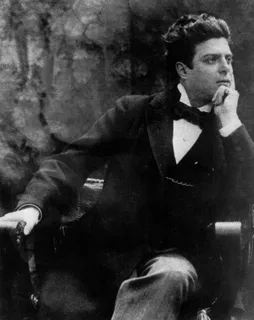
Rome, Mature Dramaturgy & South America
1904–1919- 1904–1905Signs a contract with French publisher Paul de Choudens. Premiere in Monte Carlo (Mar 16, 1905) of Amica, Mascagni’s only opera composed to a French libretto (by Paul Collin after a scenario by Choudens as “Paul Bérel”), starring Geraldine Farrar.
- 1909–1910Directs the 1909–1910 season at the Teatro Costanzi in Rome. Begins a lifelong relationship with Anna Lolli (Apr 1910, addressee of hundreds of surviving letters) and reconciles with Puccini after earlier press disputes (Oct 1910).
- 1911–1912Leads an acclaimed seven-month conducting tour of South America (May 1911), premiering the medieval legend Isabeau (libretto by Illica) at the Teatro Coliseo in Buenos Aires (Jun 2, 1911), followed in January 1912 by simultaneous Italian premieres at La Scala (under Tullio Serafin) and La Fenice in Venice (under Mascagni).
- 1912–1913Works in Bellevue near Paris with poet Gabriele D’Annunzio on the monumental four-act tragedy Parisina (1914 memoir), conducting its La Scala premiere (Dec 15, 1913) with Puccini, Giordano, and Zandonai in attendance (1914 creators’ recordings).
- 1914–1917Like Puccini, opposes Italy’s entry into World War I, during which his son Dino becomes a prisoner of war. Composes an orchestral score in 1915 for Nino Oxilia’s silent film Rapsodia satanica, conducting its Rome premiere on July 3, 1917. After a dispute with Puccini over rights to Ouida’s novel Two Little Wooden Shoes, retains the subject for Lodoletta (libretto by Giovacchino Forzano), premiered in Rome (Apr 30, 1917) and in Livorno (Jul 28) with Beniamino Gigli.
- 1919 DecPremiere at Rome’s Teatro Quirino of his three-act operetta Sì (Dec 13/14). Days later (Dec 20), attends the funeral of longtime collaborator Luigi Illica.
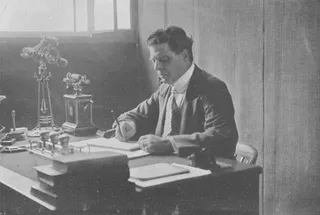
Last Operas, Public Honors & Later Years
1920–1939- 1921–1923Premiere at the Teatro Costanzi in Rome (May 2, 1921) of Il piccolo Marat, a French Revolution drama that scores a major triumph in Italy and South America (second South American tour in May 1922). Premieres the orchestral tone poem Visione lirica in Rome (Jan 14, 1923).
- 1926–1929Featured on the cover of Time magazine (Sept 6, 1926). Moves permanently in 1927 into an apartment at the Grand Hotel Plaza in Rome, his residence until his death, and represents Italy at Vienna’s Beethoven centenary. Named in 1929 among the founding members of the Royal Academy of Italy (Reale Accademia d’Italia).
- 1930–1931Conducts La bohème at Torre del Lago (1930) in homage to Giacomo Puccini (who had died in 1924), and revives Le maschere at La Scala (1931).
- 1932 Mar 23Conducts the premiere in San Remo of Pinotta, reconstructed from the recovered manuscript of his student score. Joins the National Fascist Party (PNF), aligning publicly with the regime like several contemporaries while privately criticizing its cultural dictates and later appealing unsuccessfully against the ban on Jewish composer Alberto Franchetti’s operas (see FAQ).
- 1934–1936Lifelong friend and librettist Giovanni Targioni-Tozzetti dies (May 30, 1934). Conducts the premiere of his final opera, Nerone (incorporating music conceived since the 1890s), at La Scala (Jan 16, 1935; watch 1935 newsreel), followed by Livorno (Aug 24). His son Dino dies in Somalia (Jun 1936).
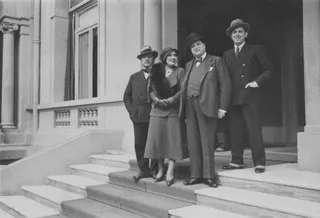
Jubilee, Final Years & Posthumous Honors
1940–1951- 1940Fiftieth-anniversary celebrations of Cavalleria rusticana take place across Italy. Mascagni conducts a landmark complete studio recording at La Scala for La Voce del Padrone (HMV), prefaced by a spoken message in his own voice.
- 1943–1944Frail in health and conducting seated on a chair, makes his farewell appearance at La Scala with L’amico Fritz (Apr 1943) and leads his final season at the Teatro dell’Opera di Roma (1943–1944, Cavalleria rusticana and L’amico Fritz).
- 1945 Aug 2Dies at age 81 in his apartment at the Grand Hotel Plaza in Rome (Il Tirreno and Time obituaries). At his funeral on August 4, thronged by ordinary citizens, postwar Italian government officials stay away because of his past association with the Fascist regime.
- 1951 & 1963In 1951, Mascagni’s remains are transferred from Rome to the Cimitero della Misericordia in his native Livorno with official state honors. On the centenary of his birth (Dec 7, 1963), Rome unveils a commemorative plaque on the Albergo del Sole, where he had stayed during the 1890 premiere of Cavalleria rusticana.